What Dog Trainers Check Before Crate Training for Sleep Anxiety
What Dog Trainers Check Before Crate Training for Sleep Anxiety
Many new puppy owners assume crate training for sleep anxiety begins by putting the puppy in the crate and closing the door. Trainers who use force-free methods know that starting without proper preparation can worsen the anxiety. Before you begin, there are specific factors to evaluate. This guide walks through each check, so you can determine whether your puppy is ready for crate training and how to set up a plan that builds confidence overnight.
Prerequisites / What You Need
Before assessing sleep anxiety readiness, gather these materials and knowledge:
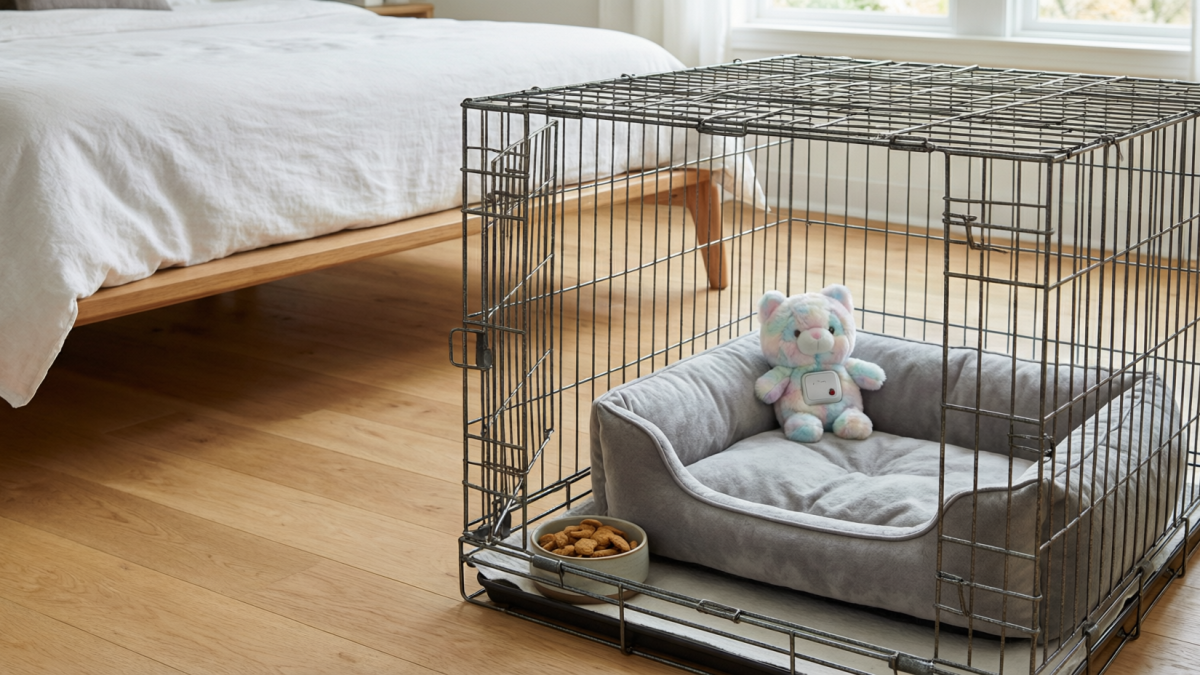
- A properly sized crate: The puppy should be able to stand, turn around, and lie down comfortably. For growing puppies, use a crate with a divider.
- Soft bedding: A washable, nonslip mat or crate pad. Avoid thick towels that can be shredded.
- High-value treats: Small, soft treats that your puppy loves (e.g., freeze-dried liver, cheese cubes).
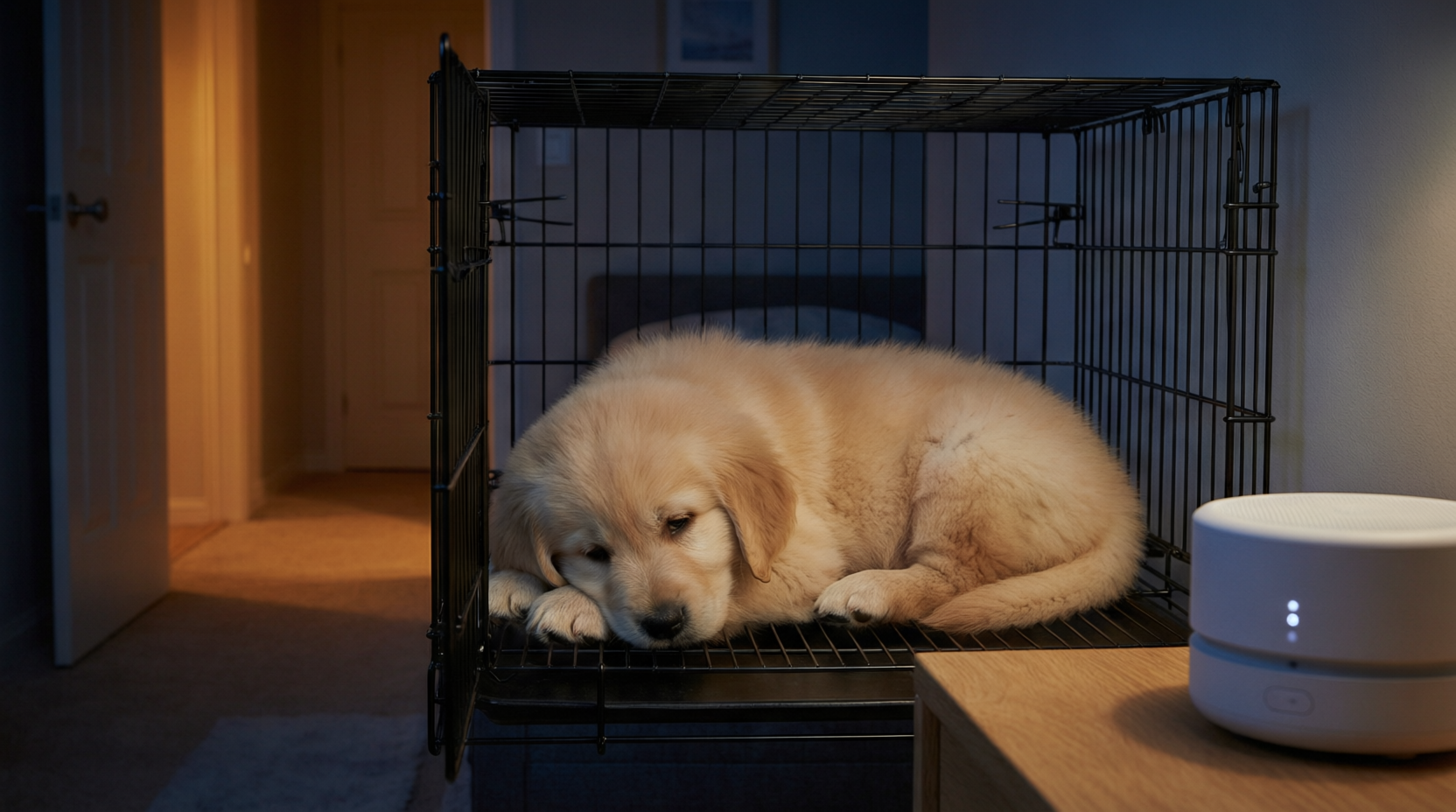
- A quiet sleep space: A location away from household traffic and drafts. The crate should be placed in your bedroom during early nights for comfort.
- Puppy’s daily schedule: Track when the puppy eats, drinks, and eliminates. This helps predict nighttime needs.
- Basic understanding of canine body language: Know signs of stress (panting, pacing, whining, lip licking) vs. relaxation.
- Veterinary clearance: If sleep anxiety includes heavy panting, trembling, or refusal to settle, rule out physical causes first.
Step-by-Step Instructions: What Trainers Check Before Crate Training for Sleep Anxiety
1. Rule Out Medical Issues
Sleep anxiety can mimic or be caused by pain, illness, or discomfort. Before any training, schedule a vet visit to check for infections, parasites, digestive problems, or teething pain. A puppy that is uncomfortable will not be able to relax in a crate, no matter how positive the training. If the vet finds a health issue, treat that first.
2. Assess the Current Sleep Environment
Where is the puppy sleeping now? If the puppy sleeps on your bed or in your room and you plan to move the crate elsewhere, expect resistance. Trainers check that the new sleeping area is similar in temperature, noise level, and safety to where the puppy has been sleeping. Start the crate next to your bed, then gradually shift it across the room over weeks.
3. Identify Underlying Fears
A puppy may have a specific fear of the crate itself, of darkness, or of being alone. Watch the puppy’s reaction as you approach the crate. If the puppy freezes, backs away, or shows appeasement signals (yawning, avoiding eye contact), do not force entry. Instead, conduct desensitization sessions: toss treats near the crate, then inside, then feed meals in the crate with the door open. Do not close the door until the puppy happily enters.
4. Evaluate Previous Crate Experience
If the puppy is adopted from a shelter or breeder, there may be a negative history. Ask about previous crate use. If the puppy was confined for long hours or punished in a crate, you will need extra time to rebuild trust. In such cases, start with a crate that has a removable top or use a wire crate so the puppy can see out.
5. Determine the Puppy’s Sleep Schedule
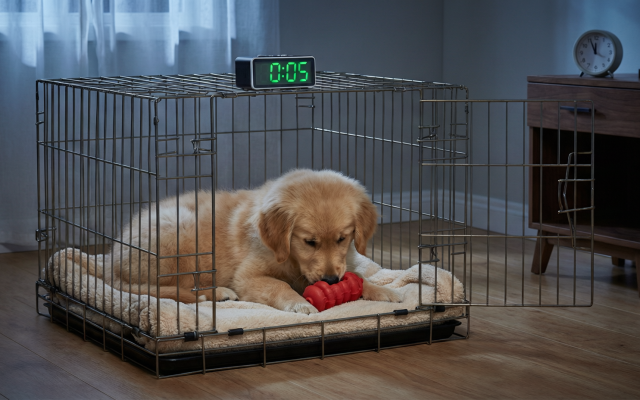
Puppies under 16 weeks old typically need a potty break every 3-4 hours overnight. Trainers check the puppy’s current elimination rhythm. If the puppy is sleeping through the night without accidents in another location, you can replicate that schedule in the crate. If not, set an alarm for the known potty time and stick to it. Never wait for the puppy to cry—take them out proactively.
6. Choose the Right Crate Type and Placement
Not all crates are equal for sleep anxiety. A plastic airline crate (enclosed) can feel like a den for some puppies but trap heat for others. A wire crate offers airflow but less privacy. Trainers recommend a crate that matches the puppy’s personal comfort: shy puppies often prefer covered crates; anxious puppies may need visibility. Place the crate at an elevation where the puppy can see you, but not facing a wall or direct light.
7. Create a Positive Association Plan
Before using the crate for sleep, spend days making it a happy place. Feed all meals in the crate, give a stuffed Kong only in the crate, and practice “crate games”: toss a treat in, say “Go to bed,” and let the puppy run in and out with the door open. Once the puppy willingly stays inside for 30+ seconds, begin closing the door for 1-2 seconds, then immediately opening and treating. Increase duration gradually over several days.
Common Mistakes & How to Avoid Them
- Skipping the vet visit: A physical problem can look like anxiety. Always rule out pain first.
- Rushing door closures: Closing the door before the puppy is comfortable creates a negative association. Wait until the puppy enters the crate eagerly.
- Using the crate for punishment: Never send the puppy to the crate as a consequence. It must be a safe zone, not a time-out space.
- Inconsistent nighttime routine: Varying bedtime or mid-night interactions confuses the puppy. Set a fixed schedule for feeding, last water intake, and walk/bathroom break before crate time.
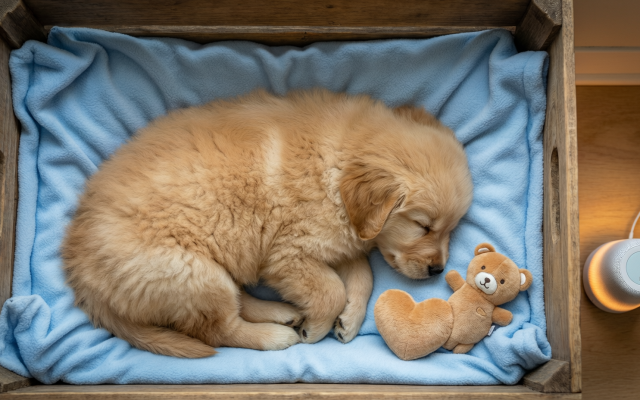
- Ignoring crying: Puppy crying can indicate genuine need (potty, hunger, fear) or learned persistence. If you gave a potty break and the puppy is still crying, try a covered crate or a heartbeat toy before you respond. But never let a puppy cry for more than 10-15 minutes without checking the underlying cause.
FAQ
How long does crate training take for sleep anxiety?
It varies by puppy, but with consistent positive association, most puppies show improvement within 1–2 weeks. Full settling—sleeping through the night without distress—may take 3–4 weeks.
Should I put the crate in my bedroom at night?
Yes, for the first few weeks. Being near you reduces isolation fear. Once the puppy sleeps through the night consistently, move the crate gradually to your desired final location.
What if my puppy cries all night?
Check if the puppy needs a potty break. If the vet has cleared health issues and you’ve provided a last bathroom trip, consider whether the crate is too big, too small, or too warm. A snuggle puppy (toy with a heartbeat) can help. If crying persists, consult a force-free trainer.
Can I give my puppy a treat in the crate at night?
Yes, a small, safe treat (like a single freeze-dried liver) right before closing the door can reinforce the positive association. Avoid large treats that could cause a middle-of-the-night potty need.
Is it okay to cover the crate?
Only if the puppy has no fear of enclosed spaces. Test first by covering just the back half. If the puppy seems calmer, cover more. If the puppy scratches at the cover, remove it immediately.
When should I stop crate training if it’s not working?
If after 3 weeks of consistent positive training the puppy still shows extreme fear (shaking, hiding, vocalizing nonstop), stop crate training and seek a certified separation anxiety specialist. Some puppies do better with an ex-pen or a puppy-proofed room.
Conclusion
Crate training for sleep anxiety is not a one-size-fits-all process. By completing these checks—medical clearance, environmental assessment, fear inventory, history review, schedule mapping, crate selection, and positive association plan—you start from the puppy’s actual needs rather than a generic routine. Move through each step at the puppy’s pace. If you remain patient and consistent, the crate becomes a calm retreat, not a source of stress. The next step is to apply these checks and begin your positive association sessions tomorrow morning.

Sarah Mitchell
This is exactly what I needed. I was about to just stick my pup in the crate and hope for the best, but now I realize I missed several steps. Thank you for including the part about ruling out medical issues first—my puppy has been teething and I bet that’s part of the problem.
Kevin L.
We adopted a 10-month-old rescue who came with serious crate fear. This guide made me realize we needed to start from scratch with desensitization. It took about two weeks of just tossing treats near the crate before he’d go in. Now he sleeps in it with the door open. We’re working on closing it gradually. Patience is key.