In This Article
Introduction
When you bring home a new puppy, a full night of sleep can feel like a distant memory—especially if your puppy cries, whines, or paces every time you leave them alone. You’re not alone: many new owners struggle with an anxious puppy who simply won’t settle. This guide walks you through a gradual, stress-free plan to help your fearful puppy learn to sleep through the night—without resorting to methods that can increase fear or undermine trust. By the end, you’ll have a step-by-step routine that respects your puppy’s emotions while building their confidence.
What You’ll Need Before Starting
Before you begin, gather a few simple items. You don’t need a training course or expensive equipment—just consistency and patience.
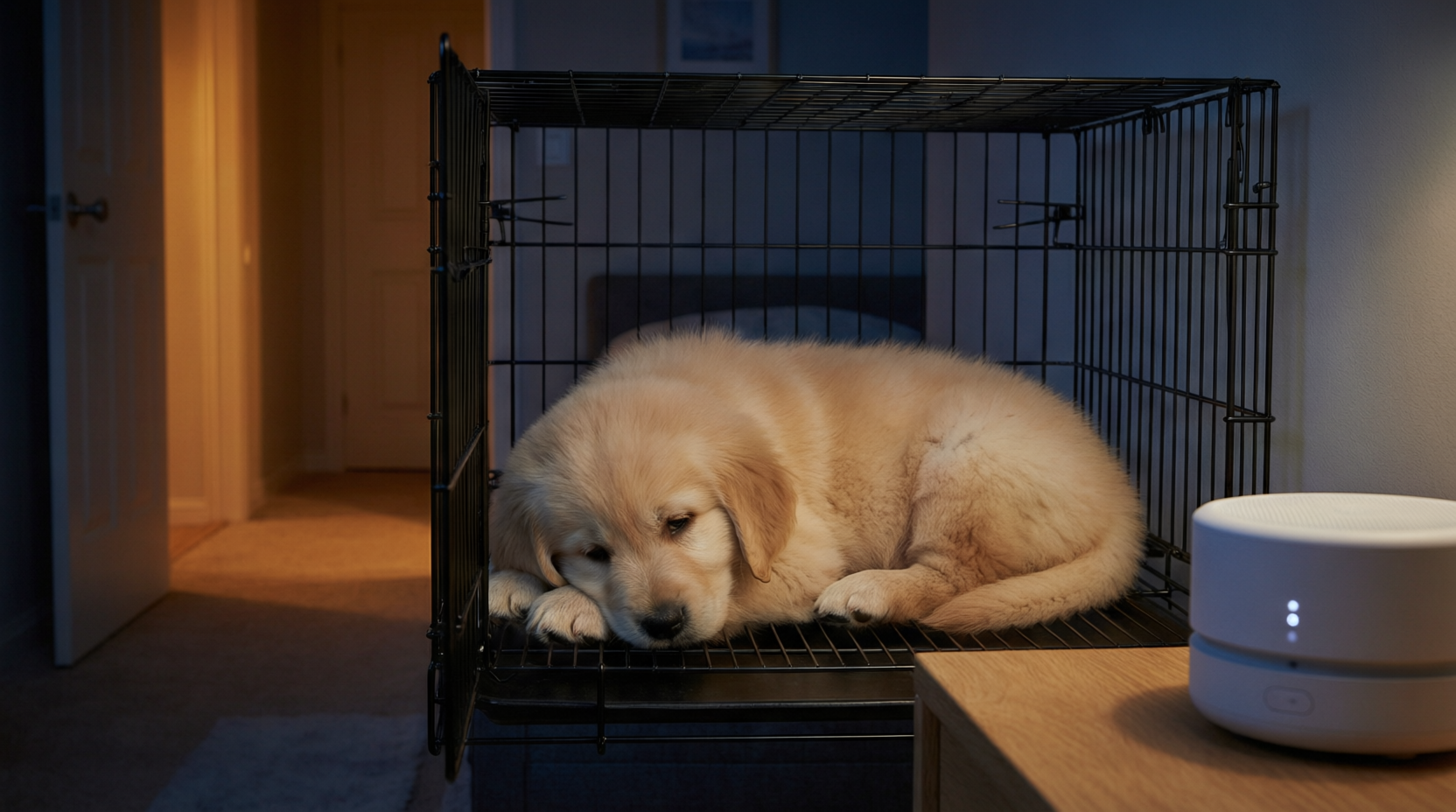
- A safe sleeping space – a crate or a puppy-proofed pen with a comfortable bed. The goal is a place your puppy views as a den, not a cage.
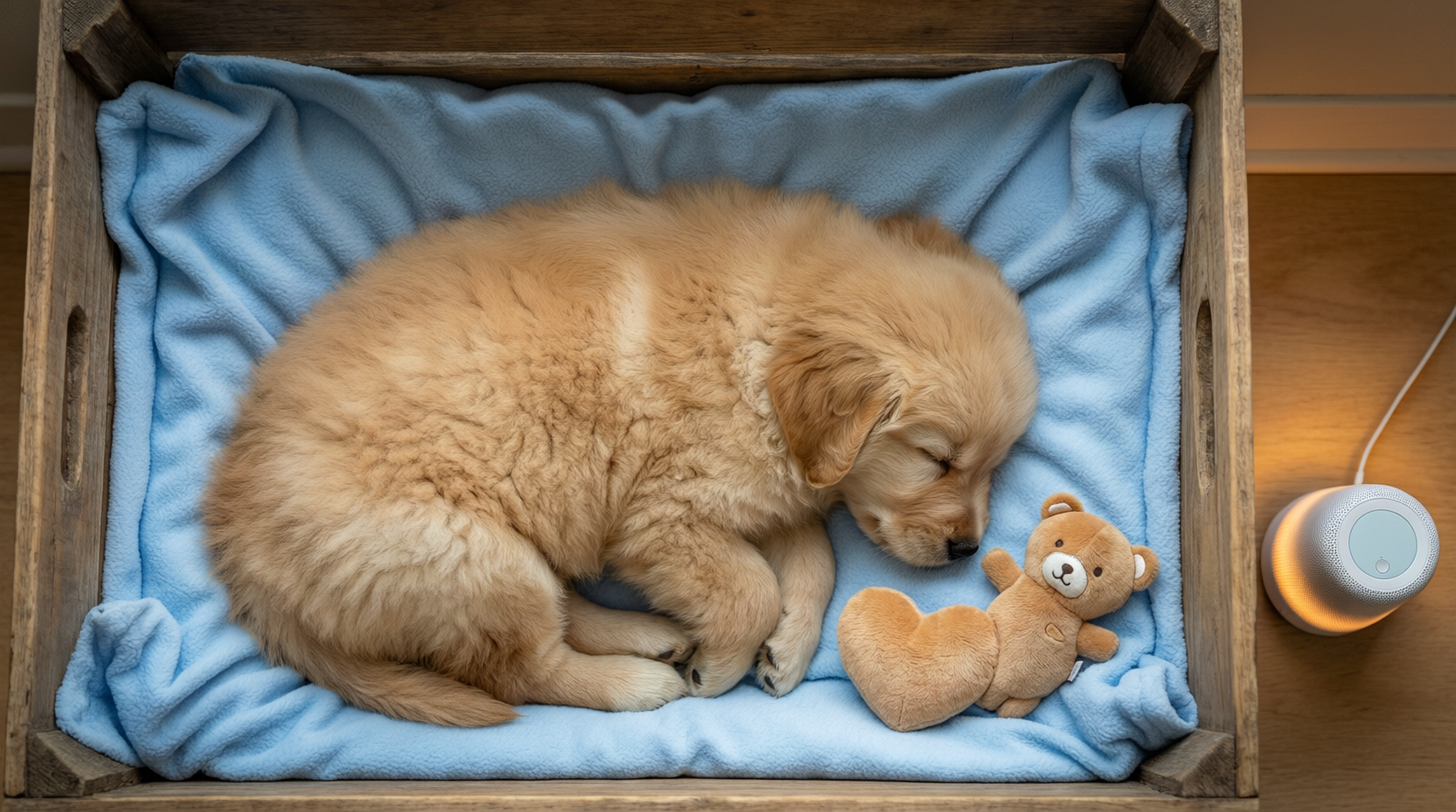
- A snuggle toy or heat pack – a soft toy that mimics a littermate’s warmth (wrap a hot water bottle in a towel, or use a Snuggle Puppy with a heartbeat simulator).
- Light, breathable cover – a lightweight blanket to drape over the crate if that helps block visual stimuli.
- Calming aids (optional) – a pheromone diffuser (like Adaptil) or a white-noise machine to mask outside sounds.
- Patience and a timer – you’ll need to resist the immediate response to crying, but also know when to step in.
Step-by-Step Instructions
Step 1: Start with Daytime Crate Acclimation
Before expecting your puppy to sleep alone at night, their sleeping space must feel safe during the day. Scatter a few treats inside the crate while leaving the door open. Let your puppy wander in and out freely. Over the course of a few days, close the door for just a few seconds while they’re focused on a treat, then open it. Gradually increase the duration until your puppy happily chooses the crate at mealtime or nap time. This builds positive associations without the pressure of nighttime separation.
Step 2: Establish a Calming Bedtime Routine
A wind-down routine signals to your puppy that sleep is coming. Around 30–45 minutes before bedtime:
- Take them out for a final potty break – a fully empty bladder reduces one common cause of crying.
- Offer a small, calm play session (no roughhousing) or a short walk to burn off energy.
- Give a boredom-breaking chew toy (such as a frozen Kong) inside their sleeping space.
- Dim the lights and speak softly. Avoid exciting or tense interactions.
Keep the routine identical every night. Repetition builds predictability, which reduces anxiety.
Step 3: Use Gradual Departures
Placing your puppy in the crate and walking away immediately can trigger panic. Instead, practice “dormant exits”: sit next to the crate for a few minutes, then stand up, take a step, and sit back down if your puppy stays calm. Over several nights, increase the distance and time away—first to the bedroom door, then to the hallway, then to the living room. Move at your puppy’s pace. If they cry as you leave, return only once they’ve had a moment of silence (even just a second). This teaches that quiet, not crying, is what brings you back.
Step 4: Respond to Crying Wisely
You will hear crying. The key is not to ignore it completely, nor to rush in at the first whimper. Distinguish between a “potty whine” (urgent, escalating) and a “settling cry” (intermittent, lower-pitched).
- If your puppy has already pottied and it’s been less than an hour, assume it’s a settling cry. Wait for a two- to three-second pause in the crying, then approach quietly, offer a calm “good boy/girl,” and stay until they settle. Do not pick them up or feed them—that reinforces the crying. Just your presence and soft voice reassure them.
- If the crying lasts more than 10–15 minutes without a pause, or if you suspect they need to go out, take them to their potty spot on leash with no play or attention, then return immediately to the crate.
Step 5: Offer a Comfort Object
An anxious puppy often benefits from a heartbeat toy or a warm water bottle wrapped in a towel. Place it near them (never overheating the space). The warmth and rhythmic tick help mimic the littermate presence. Alongside this, play soft white noise or calming music to mask household noises that might startle them awake.
Step 6: Adjust the Sleep Environment
Check common triggers: is the crate too hot or cold? Is the room too bright from a hallway light? Sometimes one simple change solves persistent crying. For example, covering the crate on three sides (leaving the door side open for ventilation) creates a den-like feel. If your puppy pants or scratches excessively, they may be too warm—remove the cover.
Common Mistakes & How to Avoid Them
- Going in too fast or too slow – Responding within the first second of a cry reinforces the crying. Waiting until the puppy has stopped for a few seconds teaches that silence leads to you, not noise. But never let a puppy cry for more than 15 minutes without checking for a real need (potty, too hot/cold).
- Using the crate for punishment – If you ban your puppy to the crate after a misbehavior, they will associate the crate with bad feelings. Always keep crate time positive.
- Inconsistent routines – Skipping the bedtime wind-down on weekends confuses the puppy’s internal clock. Stick to the same sequence even if you get home late.
- Starting too late – If you wait until your puppy is exhausted and already crying, you’ll end up training the crying response. Start the routine while they are still calm.
- Giving in to whining at 3 a.m. – A single break for play or attention can set you back days. Keep nighttime interactions boring and quick.
FAQ
Why does my puppy cry at night even after potty and food?
The crying is usually fear, not a physical need. Your puppy has never been alone before—they miss their littermates and your warmth. Use gradual departures and a comfort object to slowly teach independence.
How long does it take for an anxious puppy to sleep through the night?
For most puppies, you’ll see significant improvement within 1–2 weeks if you are consistent. Severe anxiety cases may take 3–4 weeks. Be patient; rushing can cause setbacks.
Should I ignore my puppy when they cry?
No—complete ignoring can intensify fear. Instead, use the “wait for a quiet blink” technique: pause for a second or two of quiet, then provide calm reassurance. This rewards calmness without triggering panic.
Is it okay to let my puppy sleep in my bed to stop the crying?
It’s your choice, but be aware that it can become a long-term habit and may delay independent sleeping. If you do allow bed-sleeping, know that transitioning to a crate later will be harder. Consider a gradual weaning plan instead.
What if my puppy’s crying doesn’t stop after two weeks?
If you’ve followed these steps consistently and your puppy still cries for more than 20 minutes every night, consult a force-free trainer or veterinary behaviorist. There may be an underlying issue like separation anxiety that needs professional help.
Conclusion
Helping an anxious puppy sleep through the night is not about “breaking” their will—it’s about building their confidence in small, predictable steps. You’ve learned how to create a safe sleeping space, use gradual departures, and respond calmly to crying. Start tonight with the bedtime routine and daytime crate games. Your puppy will learn that night is for sleeping, and you’ll all rest easier.
Next step: If your puppy also struggles with daytime separation, read our guide on “Preventing Separation Anxiety in Puppies” for more exercises.

This is exactly what I needed. We brought home a 9-week-old golden retriever last week and I’ve been a zombie. The “wait for a quiet blink” tip is genius—I was either jumping at every cry or feeling guilty for ignoring him. Going to start the daytime crate games today.