Anxiety Management Foundations
3 Mistakes That Ruin Your Puppy’s Nighttime Anxiety Training111
Introduction
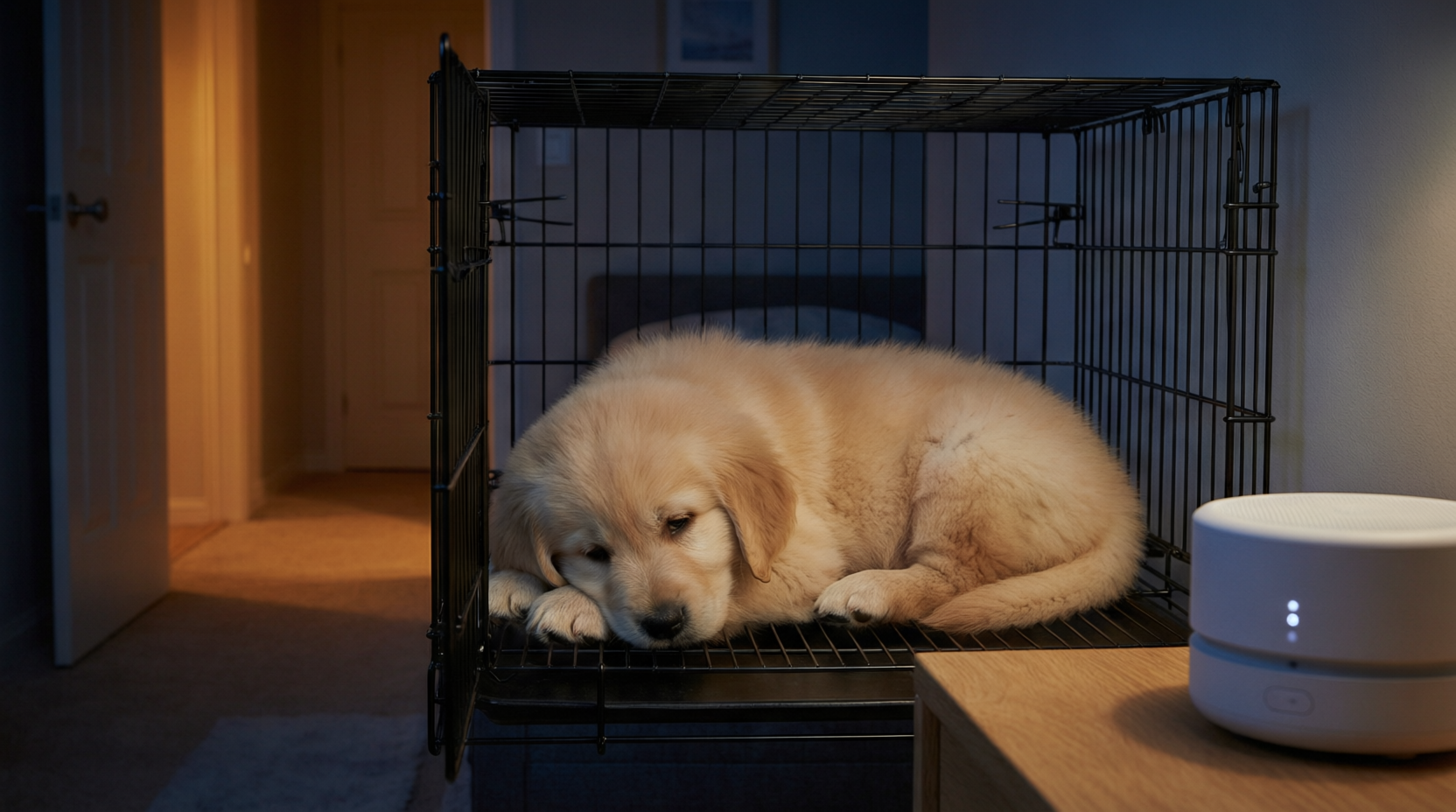
You set up the crate, dimmed the lights, and followed every bedtime routine you could find. But your puppy still cries for hours, paws at the door, or paces until you give in. If you have clicked on "3 Mistakes That Ruin Your Puppy’s nighttime anxiety Training," you already suspect that something in your approach is backfiring. These three errors are the most common reasons nighttime anxiety persists or worsens—and each one stems from well-meaning but counterproductive responses. Correcting them can transform your nights from a battle of endurance into a structured, calm process that teaches your puppy to self-soothe without fear.
Mistake 1: Responding to Every Whimper as an Emergency
The first mistake that undermines nighttime training is treating all vocalizations as signs of distress. New owners often rush to comfort the moment a puppy whines, believing they are preventing trauma. In reality, this teaches the puppy that crying summons your presence, reinforcing the very anxiety you aim to reduce. Puppies quickly learn that persistence pays off, leading to longer and louder crying sessions.
A puppy’s whimper can mean several things: a genuine need to eliminate, discomfort, boredom, or simply testing boundaries. Responding impartially to every sound removes the opportunity for the puppy to learn self-soothing. The practical tip is to pause and assess before reacting. If the crying continues beyond 5–10 minutes without signs of distress (frantic pacing, scratching, or panicked barking), it is likely a request for attention, not a true emergency.
Mistake 2: Using a Bedtime Routine That Creates Dependence
A second critical error is building a bedtime routine that requires your active participation for the puppy to settle. Examples include lying on the floor until the puppy falls asleep, repeatedly comforting through the crate bars, or leaving a radio on that must be replayed every time the puppy stirs. While these actions seem soothing, they teach the puppy that external cues—not internal calm—are necessary for sleep.
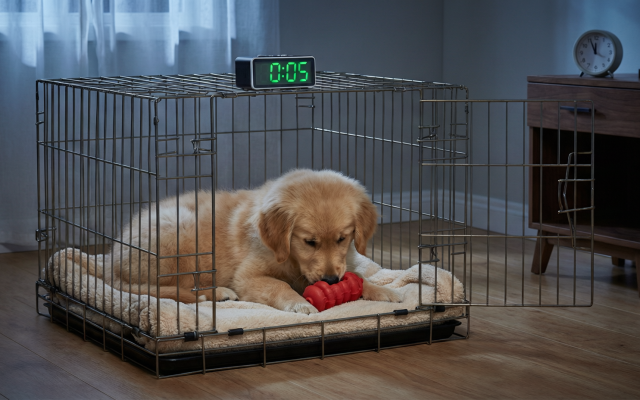
What should be taught instead is a consistent, predictable sequence that ends with the puppy alone and relaxed. The routine should involve a final potty break, a calm activity (like a chew or lick mat), and then a clear separation signal—such as a covered crate or a white noise machine that stays on all night. The key is that the puppy learns to self-soothe once the routine ends, not that your presence must persist until sleep arrives.
Mistake 3: Skipping Graduated Alone-Time Practice During the Day
Nighttime anxiety does not exist in a vacuum. The third mistake is treating night training as a separate problem from daytime separation anxiety. Owners who practice extensive alone time during the day—starting with seconds and gradually increasing—often see nighttime crying resolve faster. Without this foundation, a puppy that cannot manage five minutes alone in a living room will certainly struggle through eight hours in a crate at night.
Daytime practice builds two critical skills: tolerance of solitude and confidence that you return. Begin with the puppy in a crate or pen while you remain in sight, then slowly increase distance and duration. Once the puppy can settle for 15–30 minutes alone during the day, nighttime training becomes far more manageable. If your puppy’s nighttime anxiety is severe, pause night training and spend a week building daytime alone time first. The investment pays back exponentially.
How to Choose the Right Sequence for Your Puppy
Deciding which mistake to correct first depends on your puppy’s current response pattern. If crying is constant and escalating, start with Mistake 1: stop reinforcing attention-seeking cries. If the puppy settles only when you are present but panics the moment you leave, address Mistake 2 by creating a routine that ends with clear separation. If your puppy cannot relax during the day even for short periods, prioritize Mistake 3—building daytime independence before expecting nighttime success.
For most puppies, a structured approach is to begin with daytime alone time (Mistake 3), then implement a consistent routine (Mistake 2), and finally manage your response to nighttime crying (Mistake 1). This sequence gives the puppy the skills to cope before being asked to endure long solitude. However, if the puppy cries only at night but is fine during the day, focus on Mistake 1 and Mistake 2 simultaneously. No single sequence fits all, but the logic is simple: build capacity for calm alone time before expecting extended silence.
FAQ
How do I stop my puppy from crying at night?
Stop responding to every whimper, but do not ignore signs of a genuine potty need. Provide a pre-bed potty break, a calm routine, and a crate that feels safe. If crying persists beyond 5 minutes without distress, it may be attention-seeking. Consistency is key—any intermittent response will worsen the behavior.
Should I ignore my puppy crying at night?
Ignore only after you have ruled out urgent needs (potty, injury). For attention-seeking cries, ignoring is the correct response. If you give in after 15 minutes, you teach the puppy that 15 minutes of crying is the required duration. Use a white noise machine to help mask sounds and avoid reinforcing the crying.
When will my puppy sleep through the night?
Most puppies can sleep 5–6 hours by 4–5 months of age, provided they have consistent routines and adequate daytime exercise. Nighttime anxiety training can accelerate this timeline, but individual temperament and previous exposure to alone time matter. Expect gradual improvement over weeks, not overnight fixes.
Conclusion
The most effective step you can take tonight is to assess which of these three mistakes you are making and commit to a single correction. Begin with the one that best matches your puppy’s current behavior—not all at once. If you are currently responding to every whimper, start by pausing and waiting 5 minutes before reacting. If your routine creates dependence, end it with a clear separation signal. If daytime alone time is lacking, build that foundation. Correcting even one of these mistakes often produces a dramatic shift in nighttime calm within a week.

Lauren K.
I wish I had read this a month ago! We made mistake #1 so bad — just plopped our golden retriever puppy in the crate the first night. It was a disaster. We’re starting over with daytime training now. Thanks for the clear steps.
Marcus T.
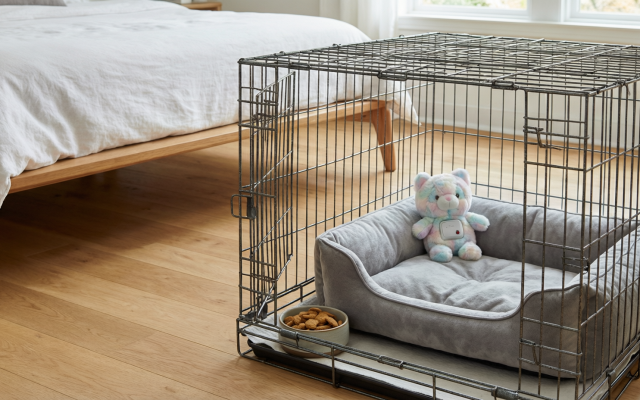
Can I ask about the crate acclimation? You say feed meals near the open crate first — do you literally put the bowl on the floor right outside the door, or inside once they’re comfortable? My 10-week-old lab mix won’t even go near it if food is inside.
Megan Torres Author
Great question! Start with the bowl on the floor just outside the open door. Once he’ll eat there calmly for a couple of days, slide it a few inches inside each meal. If he backs off, go back to the previous step. Patience is key at this stage.